Welcome To HuiXin IOT : Pioneering RFID Solutions for a Connected World!
As technology continues to advance, educational institutions are utilizing technology in a variety of ways to improve their operations and services. Traditional identification methods are gradually moving towards digitalization and intelligence. Radio Frequency Identification ( RFID) technology has been widely used in a number of fields due to its high efficiency, security, and convenience. RFID ID Cards, as an intelligent authentication tool incorporating RF technology, are gradually replacing traditional ID Cards and playing an important role in places such as schools, businesses, and government agencies. Especially in the campus environment, RFID ID card not only improves security, but also optimizes student management and campus services. In this paper, we will discuss the characteristics of RFID ID Cards, their application in campuses, as well as the challenges and solutions that may be encountered during the implementation process.
1. What is RFID ID card
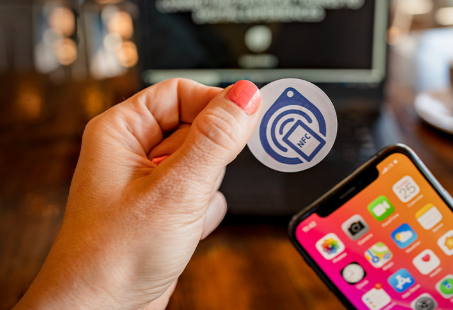
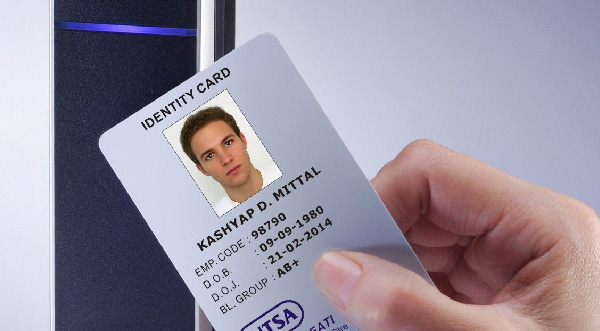
RFID (Radio Frequency Identification) is a technology that uses radio waves for identification.An RFID ID card is an identification card embedded with an RFID tag that contains a small microchip and an antenna. These components enable the card to communicate wirelessly with an RFID reader using radio waves. Unlike traditional magnetic stripe or barcode technology, it can be scanned contactlessly for authentication. RFID ID Cards typically contain the following components:
1. RFID Tag: A chip embedded in the ID card that stores identity information, such as name, school number, and photo. RFID Chip: Stores unique identity information (e.g. name, school number, employee number, etc.), processes data and communicates with the RFID reader, contains encryption to improve data security.Antenna: Responsible for receiving wireless telegrams from the RFID reader and transmitting the data back to the reader. Different types of antenna designs may be used for different frequencies of RFID Cards, e.g. coil type, microstrip type, etc.Encapsulation material: to protect the RFID chip and antenna, so that it is durable, waterproof, dustproof, generally have plastic (such as PVC, PET) or paper materials made.
2.Reader : used to read the information in the RFID tag and transmit the data to the management system.
3.Data management system: store and process RFID data to realize identity verification, attendance record, access control management and other functions.
The main advantages of RFID ID Cards include non-contact reading, high-speed identification, strong anti-counterfeiting and easy integration into existing identity management systems.
2. Whether the addition of RFID components will affect the size or appearance of the ID Card
Despite the inclusion of multiple components such as microchips and antennas, RFID ID Cards maintain the same size and appearance as traditional ID Cards. Modern RFID tags are so small that they can be easily embedded in the plastic layer of an ID card or in a smart card without affecting the physical structure or the experience of using it.The dimensions of an RFID ID card are usually in accordance with international standards, such as the ISO/IEC 7810 ID-1 standard (85.6mm × 53.98mm), and are similar to that of a smart card such as a credit card or a public transportation card. In addition, the use of RFID technology does not affect the durability and flexibility of the ID card, which can still be stored normally in a wallet or card case.
3. How to use RFID on campus: key applications
RFID ID Cards have a variety of important applications on campus, including:
1. Attendance tracking
Automatic attendance: By issuing RFID-enabled ID Cards to students, schools can automatically record attendance when students enter classrooms or dormitories.
Real-time monitoring: RFID can track student attendance in real-time, and will automatically trigger an alarm if a student misses class or leaves the school without permission.
Database management: RFID attendance system can be integrated with student management system to generate reports.
2. Access Control and Security
Building Access: RFID Cards can be used as keys to allow or restrict access to specific rooms, laboratories or buildings.
Visitor Management: RFID tags are issued to visitors, allowing organizations to monitor their activities on campus, ensuring order and security.
Emergency Tracking: In an emergency, RFID systems can quickly locate students and staff on campus, ensuring that help is given in an emergency.
3. Cashless Payment
Cafeterias and vending machines: RFID-enabled student Cards can double as prepaid Cards, and can be scanned on a card reader to pay for purchases.
Event Ticketing: Students can use RFID Cards to purchase tickets for sports games or concerts for the hungry, simplifying the admission process.
Transportation: RFID Cards can be linked to campus shuttle services, where students can simply scan their Cards to get on the bus, ensuring that only authorized people can take transportation.
info-1-1
4. RFID ID Card Implementation Steps in Schools
Implementing RFID ID in an educational institution requires careful planning and execution to ensure integration with existing systems and processes. The following are the key steps to be followed:
1. Requirements Analysis: Determine the RFID functions that the school wishes to implement, such as access control, attendance management, library checkout, etc.
2. Equipment selection: Select the appropriate RFID tags, readers and management software to ensure compatibility and scalability.
3. Infrastructure construction: Install RFID readers and ensure that the campus network can support data transmission and storage.
4. System Integration: Docking the RFID system with existing campus management systems, such as school registration and financial management, to achieve information sharing.
5. Testing and Optimization: Conduct pilot tests on a small scale to collect feedback, optimize system settings, and improve recognition rates and user experience.
6. Promotion and Training: Introduce the use of RFID ID card to teachers and students, and provide necessary training to ensure smooth promotion.
7. Maintenance and Upgrade: Regularly check the status of the equipment, repair faults in time, and upgrade the functions according to demand.
5. Potential Challenges and Solutions
Despite the many advantages of RFID ID Cards in campuses, there are still many challenges in the implementation process. RFID systems usually track personal information, such as the location, attendance and activities of students and staff, which may be misused if not properly protected; the deployment of RFID equipment and systems requires a certain amount of capital investment, and there may be compatibility problems with different RFID systems etc. .
Solution:
Data security and privacy protection: use encryption technology, access control mechanisms, and ensure that RFID tags can only be read by authorized devices.
System cost: Schools can promote RFID in phases, starting with key areas (e.g., access control, attendance) to reduce one-time investment.
Technology compatibility: Select RFID technology that complies with international standards (e.g. ISO 14443) to ensure compatibility with other systems.
Maintenance and upgrades: Establish a regular maintenance check program for RFID hardware and software, which will help identify potential problems before they lead to system failure.