Welcome To HuiXin IIOT : Pioneering RFID Solutions for a Connected World!

In recent years, RFID (Radio Frequency Identification) technology has become a highly efficient method of identification, widely used in daily life and various industries. As a fundamental tool of this technology, RFID blank cards are playing an increasingly important role. From access control systems to smart payments, from item tracking to membership management, RFID blank cards, with their versatility and flexibility, have become an indispensable part of many fields. This article will detail the basic concepts, working principles, application areas, and security of RFID blank cards, helping you better understand this essential technology.
info-1-1
1. What is an RFID Blank Card?
An RFID blank card is a type of radio frequency identification card that does not store any data. Unlike traditional barcode cards or magnetic stripe cards, RFID cards have embedded chips and antennas that allow them to exchange data with RFID readers via radio waves. The blank RFID card itself does not contain any pre-stored information and must be programmed later to assign it a specific function or use. This flexibility allows users to customize the cards according to their needs for different applications.
RFID cards typically consist of two parts: a chip and an antenna. The chip stores information and performs processing, while the antenna is responsible for transmitting signals with the RFID reader. A blank RFID card is one without pre-stored information, and users can program it to serve specific functions or uses as needed.
2. How Do RFID Blank Cards Work?
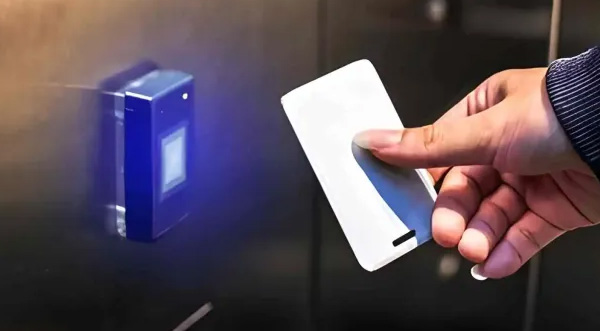
RFID blank cards work based on radio frequency identification technology. When an RFID blank card comes close to a reader, the reader emits a radio frequency signal that activates the card's internal chip and antenna. The chip in the blank card responds to the signal and transmits data. This process typically does not require contact or insertion of the card into a device, as it relies entirely on radio wave transmission. Therefore, RFID cards can be read very quickly and have a relatively long reading distance.
During the programming process, users can write specific information (such as user ID, access permissions, payment accounts, etc.) into the chip of the blank card. At this point, the card is no longer "blank" but instead contains data related to specific functions. This allows RFID blank cards to be used in various scenarios, meeting personalized needs.
3. Features of RFID Blank Cards
RFID blank cards have several distinctive features that make them useful in many scenarios:
1. Fast Recognition and Efficient Data Transfer
One of the major advantages of RFID technology is its fast recognition speed. Unlike traditional barcode systems that require visual scanning, RFID cards do not need to be directly seen or touched by the reader. The system can complete data transfer and recognition in a few seconds. This makes RFID cards especially effective for quick identity verification, item tracking, etc.
2. Large Storage Capacity
Compared to barcodes and magnetic stripe cards, RFID cards can store much more data. RFID chips typically offer larger storage space, which can hold various types of information, such as identity data, membership numbers, purchase records, and more. Different types of RFID cards come with different storage capacities, allowing users to choose the appropriate card based on their needs.
3. Durability and Water Resistance
RFID blank cards are typically made from durable materials, such as PVC, which can resist wear, water, and dust, making them adaptable to various environmental conditions. This makes them suitable for use in harsh environments, such as logistics and public transportation.
4. No Need for Batteries
RFID blank cards are typically passive cards that do not require batteries. The card draws power from the radio frequency signals emitted by the reader, meaning no battery replacement is necessary, reducing costs and increasing longevity.
5. High Security
The data stored in RFID cards is typically protected using encryption and authentication mechanisms, preventing unauthorized tampering or theft of information. This is especially important in applications such as payments or identity verification, where high security measures are crucial.

4. What Are the Uses of RFID Blank Cards?
RFID blank cards have a wide range of uses. Here are some common application scenarios:
1. Access Control Systems
RFID blank cards are commonly used in access control systems for office buildings, campuses, parking lots, etc. Employees or users can program their RFID cards to serve as personal identity markers, enabling them to verify their identity through the access control system and gain access.
2. Logistics Management
RFID cards help businesses track the storage and transportation of items in real-time. Blank RFID cards can be used to label goods, products, or transport containers, enabling automated management.
3. Electronic Payments
Many public transportation systems and payment platforms use RFID blank cards as payment tools. Users can link their card to their account for easy tap-and-go payments.
4. Membership Management
Many businesses use RFID blank cards to manage membership information. By associating a card with a member's account, businesses can offer features such as points, discounts, and other membership services.
5. How Long Do RFID Blank Cards Last?
The lifespan of RFID blank cards is generally quite long, depending on the card material and usage environment. Most RFID cards last between 3 to 5 years, though their lifespan may be shorter in harsh conditions (such as high temperatures, humidity, or frequent use). Since RFID cards do not contain consumable batteries, their lifespan is typically extended. However, external factors such as scratches, contamination, and physical damage can shorten the card's lifespan, so it is recommended to avoid excessive wear during storage and use.
6. Are RFID Blank Cards Secure?
Many people are concerned about the security of RFID blank cards and whether they can be maliciously copied or have their data stolen. In fact, RFID technology itself is relatively secure. Through encryption, dynamic authentication, and other methods, RFID cards can effectively prevent unauthorized duplication. However, in certain scenarios, if data is not encrypted or insecure technologies are used, some risks may remain.
To further improve security, some advanced applications may employ dual authentication methods, such as requiring users to input a password or undergo biometric identification to ensure data security.
7. How to Create and Use RFID Blank Cards?
The process of making RFID blank cards is quite simple and generally includes the following steps:
1.Choose the Right Material: RFID blank cards are typically made from plastic (such as PVC) or paper. Choose the appropriate material based on your needs, considering the card's durability and appearance.
2.Select RFID Chips and Antennas: Depending on the application, choose the right RFID chip (e.g., low frequency, high frequency, or ultra-high frequency) and antenna. Different chips and antennas support different operating frequencies and reading distances.
3.Manufacture the Card: Embed the RFID chip and antenna into the plastic or paper card, ensuring the antenna's layout and the chip's stability.
4.Programming and Customization: Use specialized equipment to program the RFID blank card, assigning it specific information such as ID numbers, permissions, etc.
When using an RFID blank card, users simply need to place the card near an RFID reader, and the system will automatically read the data stored on the card and perform the corresponding action.



Plus regular updates, exclusive discounts and the latest product news!