Welcome To HuiXin IOT : Pioneering RFID Solutions for a Connected World!
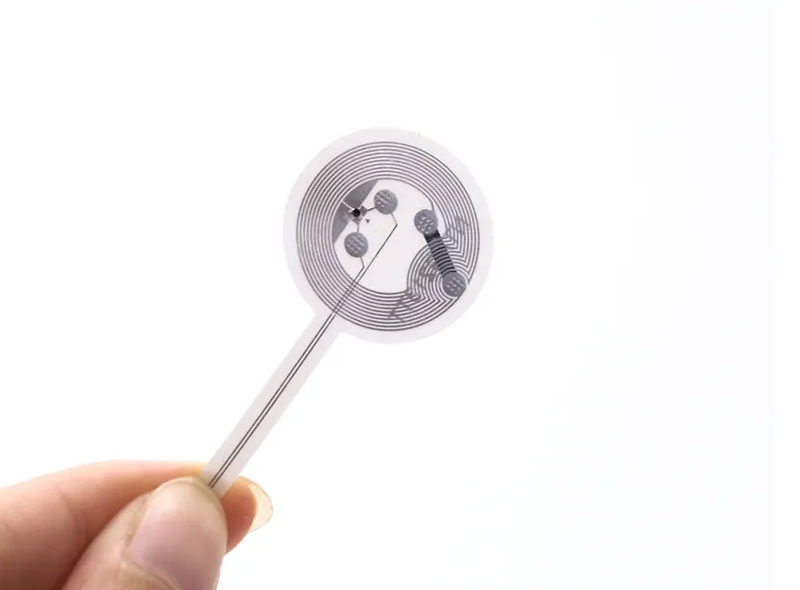
RFID anti-counterfeit labels are designed to combat counterfeit products by incorporating an RFID chip. The RFID Label offers advanced security features, such as encryption and authentication, to ensure the authenticity of the labeled product. The anti-counterfeit labels can store additional information, such as product details and expiration dates, to help streamline inventory management and supply chain processes.
In premium consumer goods markets—such as tobacco, fine tea, and alcoholic beverages—brand value is built slowly but can be destroyed in an instant. A single counterfeit product entering the market is often enough to damage years of reputation, especially when consumers begin to question product authenticity.
As global supply chains expand and distribution channels become increasingly complex, brand owners face growing challenges: counterfeit goods are easier to produce, unauthorized cross-region sales are harder to control, and traditional identification methods no longer provide sufficient visibility. For high-value products, these risks directly translate into lost revenue, weakened dealer relationships, and declining consumer trust.
Against this backdrop, RFID technology has emerged as a practical and scalable solution. This article explores how RFID-based anti-counterfeiting and traceability systems help premium brands establish full lifecycle visibility, enforce channel compliance, and restore confidence across the supply chain.
For years, brands have relied on printed labels, holograms, barcodes, and QR codes to protect their products. While these methods still play a role, they share several fundamental limitations.
Printed labels are easy to replicate. Barcodes and QR codes can be copied, photographed, or reused. Once a counterfeit enters circulation, it becomes extremely difficult to distinguish it from a genuine product using visual inspection alone. In many cases, even distributors and retailers are unable to identify the difference.
At the same time, channel diversion—often referred to as gray-market trading—has become more frequent. Products intended for one region are resold in another, causing price distortion and dealer conflict. Without reliable item-level tracking, brands are forced to rely on manual audits and after-the-fact investigations, which are costly and slow.
Operationally, many companies still depend on manual record-keeping or barcode scanning. These processes are labor-intensive, prone to errors, and poorly suited for real-time decision-making. Data is fragmented across systems, making it difficult to gain a clear picture of inventory movement or product status.
For high-value goods, these limitations create an unacceptable level of risk.

RFID fundamentally changes how products are identified and managed. Unlike printed codes, RFID tags contain an embedded chip with a globally unique identifier, often referred to as a TID (Tag Identifier). This identifier cannot be duplicated or altered, making it a reliable digital identity for each individual item.
In an RFID-based anti-counterfeiting system, every product is assigned its own unique digital identity at the production stage. This identity is then linked to key product information, including manufacturing data, batch numbers, authorized distribution channels, and logistics records.
Because RFID tags can be read wirelessly and without line-of-sight, data collection becomes faster, more accurate, and far less dependent on manual intervention. This capability is what enables true item-level traceability at scale.
An effective RFID anti-counterfeiting solution is not limited to tagging products. It requires the integration of tags, hardware, and software into a unified system.
Item-Level Identification from the Factory
At the manufacturing stage, each product is embedded or labeled with an RFID tag. During encoding, the tag’s unique ID is bound to the product’s digital record in the system. From this point forward, the product carries a permanent, verifiable identity throughout its lifecycle.
This approach ensures that every individual item—not just a batch or pallet—can be tracked and verified.
Automated Warehousing and Inventory Operations
In warehouses and distribution centers, RFID handheld readers and fixed-position antennas enable rapid, contactless scanning. Hundreds of items can be identified within seconds, dramatically improving the efficiency of inbound, outbound, and inventory-check processes.
Every scan automatically updates the backend system, eliminating manual data entry and reducing the risk of human error. Inventory accuracy typically exceeds 99%, even in high-volume environments.
Real-Time Logistics and Channel Monitoring
As products move through logistics hubs and regional distribution networks, RFID data is continuously captured and uploaded to a centralized platform. Brand owners gain real-time visibility into product flow across regions, allowing them to detect anomalies such as unauthorized transfers or unexpected route changes.
This level of transparency makes it significantly easier to enforce channel agreements and address gray-market activity before it escalates.
Consumer Authentication and Brand Engagement
While RFID primarily serves backend operations, it also plays an important role at the consumer level.
For products that reach the end customer, brands may choose to combine RFID with NFC or printed QR codes. Consumers can scan the product using a smartphone to verify authenticity, view origin information, and access brand content.
This interaction does more than confirm legitimacy. It creates a direct communication channel between the brand and the consumer, reinforcing trust and enhancing the overall brand experience.
Product Anti-Counterfeiting RFID: Rebuilding Trust and Defending Brand Value
Why Choose us
Ask How We can Help
Related Post You may also like
QUALITY & VALUE
EXPERTISE & INNOVATION
EFFICIENT & RELIABILITY
1. Is the RFID anti-counterfeiting label easy to be destroyed or removed?
2. Is RFID anti-counterfeiting technology applicable to all types of products?
3. How can consumers verify RFID anti-counterfeiting labels by themselves?
Multi-dimensional exploration of product anti-counterfeiting: the rise of RFID technology
In today’s era of accelerated globalization and increasingly diversified consumer demands, the problem of counterfeit goods is wandering in the market like a ghost, not only eroding the value cornerstone of the brand, but also posing a serious threat to the rights and interests of consumers. The proliferation of counterfeit and shoddy products not only damages the economic interests of formal enterprises, but also disrupts the market order and weakens the public’s trust in brands. Therefore, how to achieve product anti-counterfeiting has become a key link for enterprises to protect their own brands and maintain fair competition in the market.
Faced with the challenge of counterfeit products, the industry has explored a variety of anti-counterfeiting methods, among which RFID technology stands out for its high efficiency, convenience and difficulty to copy.
RFID, or radio frequency identification technology, reads the information stored in the tag contactlessly through radio waves. In product anti-counterfeiting, manufacturers assign each product a unique RFID tag containing key information such as the serial number, production date, and place of origin. Consumers or merchants only need to use an RFID reader to scan the tag to quickly verify the authenticity of the product and effectively combat counterfeiting.
RFID tags are small and light, allowing manufacturers to easily embed them in products or packaging without affecting the product’s appearance. When verifying, just bring the RFID reader close to the tag to instantly read and display the product information.
Its advantages include:
Efficiency: RFID technology realizes fast and batch verification, greatly improving the efficiency of anti-counterfeiting.
Accuracy: Each RFID tag has a unique identifier that cannot be copied, ensuring accurate anti-counterfeiting.
Traceability: RFID tags enable the entire process of product traceability from production to sales, providing consumers with a transparent and secure information chain.
Intelligent management: Combined with the Internet of Things technology, RFID can also help enterprises realize the intelligence of inventory management and improve operational efficiency.
Therefore, there are many RFID labels for product anti-counterfeiting on the market. Among them, Alien Higgs® 3 RFID Self-adhesive Label have significant advantages in product anti-counterfeiting, making them an ideal choice in this field. An Alien Higgs® 3 chip with a 64-bit unique TID (tag identifier) equips the label. Each label has a unique identification code that is difficult to copy and forge, thereby effectively preventing counterfeit products from entering the market.
With the continuous maturity of technology and the gradual reduction of costs, the application of RFID technology in the field of product anti-counterfeiting is becoming more and more extensive. In particular, luxury goods and high street fashion brands have integrated RFID or NFC technology into their products to enhance anti-counterfeiting capabilities and protect brand value.
Successful cases include:
Mango, Hugo Boss: These fashion brands have achieved full monitoring from the source of production to the retail terminal by equipping each product with RFID tags, effectively reducing the circulation of counterfeit products.
Adidas, Nike: As leaders in the sportswear industry, Adidas and Nike have long applied RFID technology to product anti-counterfeiting. Consumers can scan the labels through mobile phone APP to obtain product details and authenticity verification results.
Ralph Lauren, AZ Factory: These high-end brands also use RFID technology to not only improve the anti-counterfeiting effect, but also enhance the interactive experience with consumers through digital means.
Retail giants such as Target: As early as 2017, retail brands such as Target began to introduce RFID technology in inventory management, which not only improved inventory management efficiency, but also indirectly promoted the development of product anti-counterfeiting work.