Welcome To HuiXin IOT : Pioneering RFID Solutions for a Connected World!
There are some key reasons why Google Reviews are especially helpful for local businesses.
Impact on trust – More reviews make you more credible in the eyes of consumers, improving the trust they have in you.
Map pack rankings – A business with more reviews is more likely to appear in the local pack (the top three results) on Google Maps, a key platform where people search locally for businesses.
Click-through rates – A business with more and better reviews will attract more people, leading to a boosted CTR.
Conversion behaviour – Reviews are a powerful form of social proof, and prospective customers will be influenced by the fact that others have had good experiences with your business, leading to more conversions.
Many businesses struggle to boost Google Reviews or get the ball rolling altogether. It can often be down to:
Timing mistakes – Waiting too long after a consumer’s experience will result in a lower chance of getting a review.
Fear of rejection – Many businesses don’t ask because they’re overly concerned with being told no or fear negative feedback.
No review system – If no clear system is set up, customers may not even know how to leave a review.
Staff inconsistency – People are different, and some staff members will remember or be more confident about asking for reviews, while others will not. If there is no clear company-wide approach, inconsistency will occur.
Poor customer follow-up – If customer follow-up is poor, you miss the window where consumers are happy to leave reviews.
Google has policies on not only what they don’t allow reviewers to do, but also what businesses can’t do. Some of these include:
Incentive rules – Google strictly prohibits businesses from offering rewards for reviews.
Review gating – Review gating is when you direct positive reviews to a public platform and negative reviews to a private one. Google does not allow this.
Fake reviews – Google forbids fake reviews and will remove them. Penalties for having fake reviews can include your business profile being suspended and having a warning alert added to your business profile, letting consumers know that you have suspicious review activity.
Platform compliance ensures that Google will not ban you from having a profile, suspend your account or remove all your reviews. Google encourages and prioritises authentic and polite feedback that adheres to its content policies.
Here are some of the best ways to get Google Reviews on a more regular basis.
Asking in person! A simple and effective way is just asking a customer for a review after their positive experience.
SMS review requests: Texting out review requests shortly after customers’ experiences can help boost Google Reviews, as rarely do people not open incoming text messages.
Automated email follow-ups: You can use review management tools to send personalised emails immediately after a purchase or service, asking for feedback. 40% of people will likely leave a review if asked by email.
QR codes in-store: QR codes at key points in the store make it simple for people to use their phones to scan the code and then be taken automatically to a review page.
Website pop-ups: Pop-ups with a strong CTA can be a useful tool for consumers. They may not have considered leaving a review, but a pop-up can be a helpful nudge.
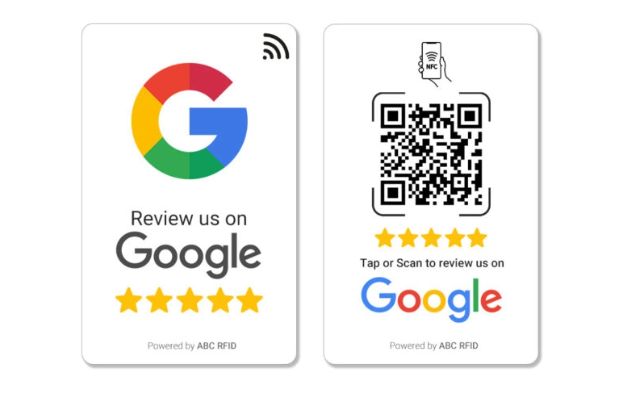
Review cards: Review cards left at the point of sale with a QR code or a link add a more personal touch to asking for reviews. It’s creative and simplifies the process.
Invoices & receipts: Invoices and receipts, both physical and digital, are overlooked parts of the customer journey. They are documents that are regularly looked at, no matter what, and offer another chance for the appearance of a QR code, link and strong CTA to leave a review.
Customer support follow-ups: A customer follow-up can be an email, phone call, or message where you reach out after a purchase or service to ensure a customer is satisfied. Whilst asking for a review shouldn't be the priority of the interaction, it is another avenue to ask for it without seeming pushy.
Social media CTAs: You should be using social media to engage with your audience. You can use the various platforms to highlight good reviews, ask for them and reply to comments and reviews.
Staff incentives (non-review based): You can't incentivise customers for reviews, but creating a positive culture around reviews can be good for the staff. Run competitions, raffles, and give shout-outs to help embed Google Reviews into your company's mindset.
NFC tap products: Make use of NFC (Near Field Communication) cards, stickers, and plates at various points in a shop to encourage reviews. These cards make it easy for people to leave reviews; all they have to do is tap their phone to them and they are taken to a review page.
Post-appointment SMS: It’s not strictly e-commerce companies that need reviews. Appointment-based services (hairdresser, physio, nail salon) can benefit from sending a clear and short SMS message out within 24 hours after the appointment to garner reviews.
Booking confirmations: Even if the service hasn’t been fully experienced, reviews can still be given. Industries with bookings can be integral parts of the customer journey, and asking for reviews after booking is appropriate, as this section of the journey could make or break an experience.
Loyalty programme integration: While direct incentives are a no-go, making reviews a gateway to a program is similar to when you ask people to subscribe or sign up for the newsletter. It's not a direct transaction, but down the line, being a part of this loyalty program could give them access to free shipping, reward points and first access to new products.
Automated review platforms: There are review management platforms that can help you collect, track and automate the process of sending out review requests. It can help streamline the whole process and easily scale as needed.
Knowing how to boost Google Reviews and implementing the strategies is needed, but it can be time-consuming. Automation can help you more easily increase and manage Google Reviews.
Review Request Flows
Automation tools can streamline the whole process, automatically collecting and sending out review requests right after purchase.
Timing Triggers
Automated Google review requests can be set to be triggered when certain events occur, such as immediately after a sale or when shipping is confirmed.
Multi-location Workflows
Managing multiple locations can be challenging. Automation can group all the reviews on a centralised platform, monitor activity, send out requests and streamline workflows across multiple locations.
Response Tracking
Automation can easily track requests and responses, alerting you to actions you need to take, help you form appropriate responses and stay on top of everything Google review related.
Many people worry about being annoying to customers by asking for reviews. There are things you can do to increase Google Reviews without coming off as overly focused on it.
Ask timing psychology – When you ask is important. The best time is at the moment of elation for the consumer, such as just after a sale or within 24 hours of receiving the product. If they are pleased, this time will find them at their most positive and willing to write a review.
Friction removal – Make it as easy as possible. What stops people is a whole process, so remove the friction of the review process and do everything for them, bar write the review. QR codes, links, and mobile-friendly processes are all methods that help remove friction.
Language scripting – Writing scripts for staff helps with consistency, confidence and helps you establish a brand voice.
Follow-up cadence – Reminders must be short and less forceful. They are gentle reminders for engagement, but don't chase a lost cause. Be friendly, but don't persist and move on after 2 or so reminders.
You need Google Reviews to grow, but how many do you need to even be seen?
The industry standard is that 10 Google Reviews will allow you to be locally ranked. The average consumer needs more and the trust threshold for them is higher. Almost two-thirds of customers think a business should have between 20 and 99 reviews before they trust the average star rating.
Velocity is also more important than volume. Customers only trust businesses with recent reviews, demonstrating an active and prosperous business. They also expect to review diversity and should be able to find reviews on multiple platforms.
With more visibility, you rank higher on Google, and the more people find you and leave reviews.
If you've asked yourself, "How can I get more Google Reviews?", you've got your answers, begin to implement them and still have not gotten reviews, then you need to look over everything.
You should:
Do delivery troubleshooting and examine your whole process for any problems.
Look at your asking for review scripts and make changes, test them and tweak again as needed.
Map customer journeys and identify any gaps. If there are, then make changes to ensure there aren’t any and you are not losing opportunities to create engagement.
Audit staff processes to ensure everyone is on board and following a process where feedback is at the core of your company.
We at Tap On Reviews can help you grow your business and enhance engagement. The ways we can support you include:
Automation – Our products help streamline the review collection process, automatically redirecting people to review pages.
NFC and SMS Technology – Our cards and review plates utilise accessible technology that 97% of modern smartphones possess, and the inclusion of QR codes means any phone with a camera and the internet can take advantage too.
Scalable deployment – NFC cards can be distributed physically and digitally, allowing you to deploy at scale.
Competitive advantage positioning – If you are a smaller or growing business, utilising Tap On Review products gives you another path to getting more in-person reviews that competitors may not have considered.