Welcome To HuiXin IOT : Pioneering RFID Solutions for a Connected World!
RFID Cards have revolutionized how we access, track, and secure information in today's digital age. Whether you're entering a building, tapping for payment, or tracking assets, RFID Cards are quietly doing the heavy lifting behind the scenes. Let's break down what they are, how they work, and why they matter.
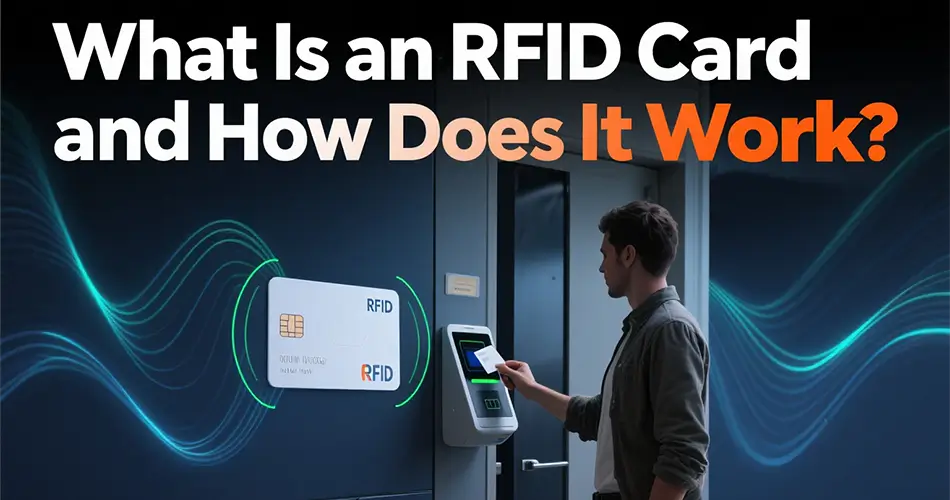
RFID stands for Radio Frequency Identification. An RFID Card is a contactless smart card that uses radio waves to communicate with an RFID reader. These cards contain a small chip and antenna that allow them to transmit data wirelessly over short distances.
RFID Cards are incredibly versatile. They are used in:
Access control (buildings, offices, hotels)
Public transportation systems
Cashless payment systems
Student or employee ID cards
Library and asset tracking
Membership and loyalty cards
By automating identification and verification processes, RFID Cards save time, reduce human error, and increase security.
RFID Cards operate through electromagnetic fields. Here's a simple breakdown:
The RFID Card contains a microchip and antenna.
An RFID reader emits a radio signal.
When the card enters the signal range, it responds by sending data stored on its chip.
The reader receives and interprets this data, triggering actions like unlocking a door or recording attendance.
Passive RFID Cards (the most common type) don't have a battery—they're powered by the reader's signal.
At RFIDSilicone, we offer a wide variety of RFID Cards for different industries and needs:
PVC RFID Cards – Great for membership and ID cards.
ABS RFID Key Cards – Durable and waterproof, perfect for hotels and gyms.
Epoxy RFID Cards – Sleek design with full-color printing.
Wooden RFID Cards – Eco-friendly, elegant, and customizable.
Contactless Smart Cards – For secure payment and identification.
All our cards support popular chip types such as LF (125kHz), HF (13.56MHz), and UHF (860~960MHz).
Why are RFID Cards so widely used? Here are the core advantages:
Contactless convenience
Fast data transfer
Enhanced security
Durable and weather-resistant
Low maintenance
Custom branding possibilities
Scalable and compatible with various systems
Customization isn't just about looks—it's about function and brand identity. Here's how you can get the perfect RFID Card:
Choose the right chip type: LF, HF, or UHF depending on your application.
Decide the material: PVC, PET, ABS, wood, or epoxy.
Pick the printing style: Silk screen, offset, laser engraving, or UV printing.
Add personalization: Numbering, barcode, magnetic stripe, signature panel, etc.
Select card size and shape: Standard or custom die-cut shapes.