Welcome To HuiXin IOT : Pioneering RFID Solutions for a Connected World!
RFID cable tie tags , also known as RFID strap tags, are a type of smart identification technology. They utilize Radio Frequency Identification (RFID) technology, enabling the tracking and management of items by attaching the tag to a cable tie. These tags typically consist of a chip with a certain capacity and a plastic strap encapsulating an antenna. The chip stores relevant information about the item, while the antenna communicates with a reader/writer.
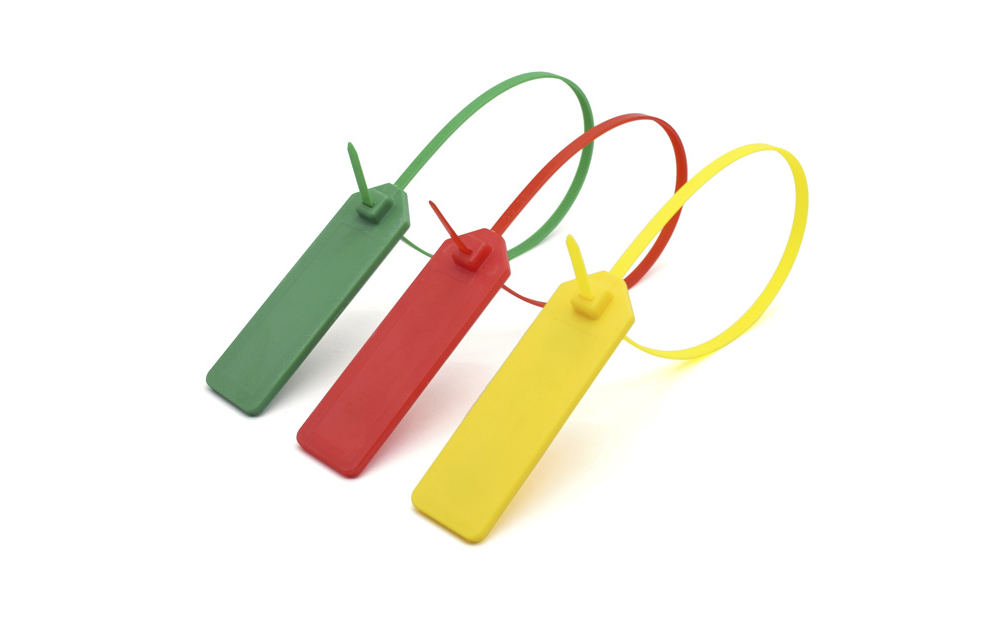
RFID cable tie tags offer many advantages. First, they provide contactless automatic identification. Simply bringing the reader/writer close to the tag allows it to read the stored information without physical contact. This significantly improves efficiency and reduces wear and damage caused by frequent reading and writing.
Second, RFID cable tie tags enable real-time tracking and positioning of items. By attaching the tag to an item, its location and status can be accurately recorded. This is particularly important for industries such as logistics and warehousing, improving the accuracy and efficiency of inventory management and preventing lost or misdelivered items.Furthermore,
RFID cable tie tags also have anti-counterfeiting features. Since each tag has a unique identification code, it effectively prevents the circulation of counterfeit or substandard products. Consumers can verify the authenticity of products and access relevant information simply by reading the information on the tag, protecting their rights.
RFID cable ties have a wide range of applications. In the logistics industry, they can be used for cargo tracking, inventory management, and theft prevention. In manufacturing, they can be used for automated control of production processes and quality management. In retail, they can be used for anti-theft and management of goods. In the medical industry, they can be used for tracking and sterilization management of medical devices. In short, RFID cable ties play an important role in various industries.
Despite the many advantages of RFID cable ties, there are also some challenges and limitations. First, the high cost is a problem. Due to the relatively new and complex technology, the price of tags and reading/writing equipment is high, which may be a burden for some small businesses. Second, the reading/writing range is limited. Due to the size and packaging limitations of cable ties, their reading/writing range is relatively small, which cannot meet the needs of certain specific scenarios.
In conclusion, RFID cable ties, as an intelligent identification technology, have advantages such as non-contact automatic identification, real-time tracking, and anti-counterfeiting, and are widely used in various industries such as logistics, manufacturing, retail, and healthcare. However, given the limitations of cost and read/write range, we still need to continuously research and develop new solutions to better meet market demands.