In 1948, Harry Stockman's article "Communication by Means of Reflected Power" laid the theoretical foundation for the development of RFID. Since the 1960s, RFID technology has entered a rapidly develo
School fixed assets have a large quantity, diverse types, and scattered departmental use. It is difficult to control fixed assets such as office supplies, teaching equipment, laboratory instruments, b
As a small tentacle of the Internet of Things, RFID can always be perfectly integrated into various industries, such as retail, logistics, clothing, aviation, books, healthcare, industrial manufacturi
Nowadays, the application of RFID technology in production line management is very common. Through RFID technology, production data and equipment status data can be automatically collected and uploade
In recent years, domestic giants such as Alibaba and JD.com have started using RFID technology. They usually use RFID in logistics management, anti-counterfeiting traceability, new retail and other fi
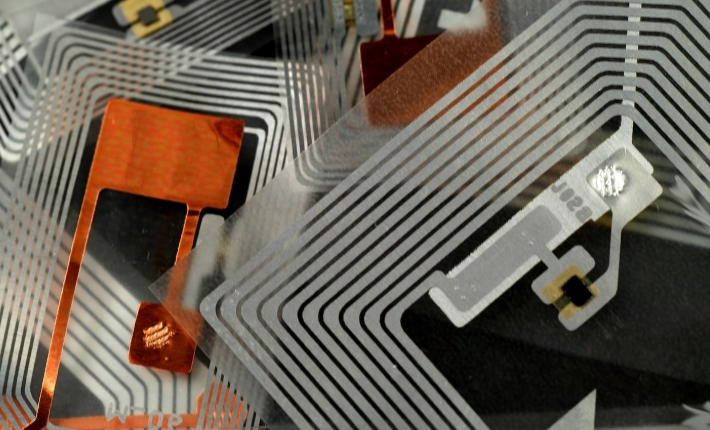
RFID (Radio Frequency Identification) is a non-contact automatic identification technology that automatically identifies target objects and obtains relevant data through radio frequency signals. The i
RFID electronic tags are divided into three categories: passive, semi passive (also known as semi-active), and active.Passive RFID electronic tagPassive tags do not have an internal power supply. Its
With the improvement of living standards, the animal husbandry industry is also developing rapidly, and large-scale and specialized animal husbandry is being carried out. Promote the development of tr
As early as the 1990s, ISO/IEC began developing the container standard ISO 10374, followed by the official container electronics standard ISO 18185, animal management standards ISO 11784/5, ISO 14223,
Under normal circumstances, an RFID reader can only read or write to one RFID card in the magnetic field at a time. However, in practical applications, multiple cards often enter the reader's RF field
The commercial application of RFID technology began in the late 1960s, and electronic article surveillance (EAS) systems based on "1-bit responders" were widely used in shopping malls and supermarkets
According to whether there is a battery on the label, it can be divided into passive tags, active tags, and semi-active tags. Passive tags are RFID tags in the usual sense, which are passive tags with