What are the technologies closely related to the Internet of Things? In recent years, "smart scenes" around us have become increasingly common. Smart taxi hailing, smart reading, smart retail, and smart healthcare cover almost every aspect of our daily life. With the support of national policies, the smart scene will also expand to national industry, energy, chemical industry, and so on. Speaking of which, we have to mention the 'Internet of Things', which has made all of this a reality. The Internet of Things enables every object in the vast world to become a unique and independent existence through intelligent perception technology, allowing it to connect to communication networks and achieve the interconnection of all things.
The literal translation of "IoT of things" is the Internet connected with things. It can be seen that the core technology of the Internet of things is also the Internet technology, and the Internet of things is an extension and expansion on its basis. So what are the key technologies closely related to the Internet of Things?
RFID technology.
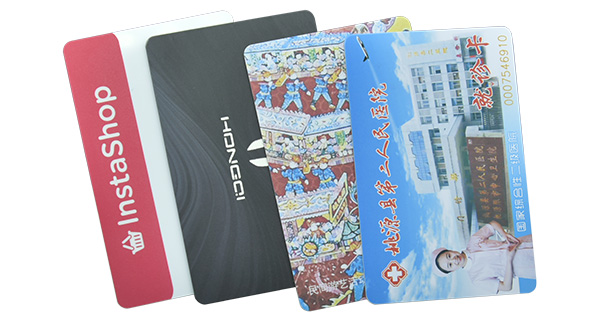
RFID stands for Radio Frequency Identification, which is a non-contact automatic identification technology and one of the underlying information collection technologies of the Internet of Things. A complete
RFID system consists of three parts:
RFID reader/writer, electronic tag (responder), and application software system. Its working principle is that the reader/writer emits radio wave energy at a specific frequency to drive the internal circuit of the electronic tag and send its internal data to the reader/writer. The reader receives data and transmits it to the application for corresponding processing. Sensor network technology.
Sensor network technology. A sensor is a device that can sense the information being measured and transform it into the required form of information according to certain rules. It, combined with
RFID technology, can quickly obtain information such as the location, temperature, and status of an object. Using a large number of sensor devices and collaborating them to monitor physical or environmental conditions at different locations is equivalent to establishing a sensor network. Wireless sensor networks have been widely used in environmental and ecological monitoring, health monitoring, home automation, and traffic control.
Short distance wireless communication technology. The
RFID tag data after perception recognition can be directly sent to the central system through wireless transmission technology, which is fast and efficient. Short distance wireless communication technology has been widely applied. According to different technical characteristics and usage ranges, the wireless transmission technologies involved in the Internet of Things mainly include Wi Fi technology, Bluetooth technology, ZigBee technology, UWB (Ultra Wideband) technology, mobile Ad hoc network technology, and corresponding NS2 simulation technology. Cloud computing technology. Cloud computing is the transfer of data computation from local to cloud servers, responsible for calculating and analyzing the information collected by the Internet of Things, and providing decision-making basis data for subsequent services. Local only collects, transmits, and executes data, greatly enhancing storage and computing capabilities through cloud computing technology.
Big data processing technology. The processing capability of big data greatly exceeds the capabilities of traditional database software tools in terms of data acquisition, storage, management, and analysis. Therefore, the combination of the Internet of Things and big data technology is the trend, and big data is not about being "big", but about being "useful". The advantage of big data technology is that it can extract "digital treasures" from the massive data of the Internet of Things.